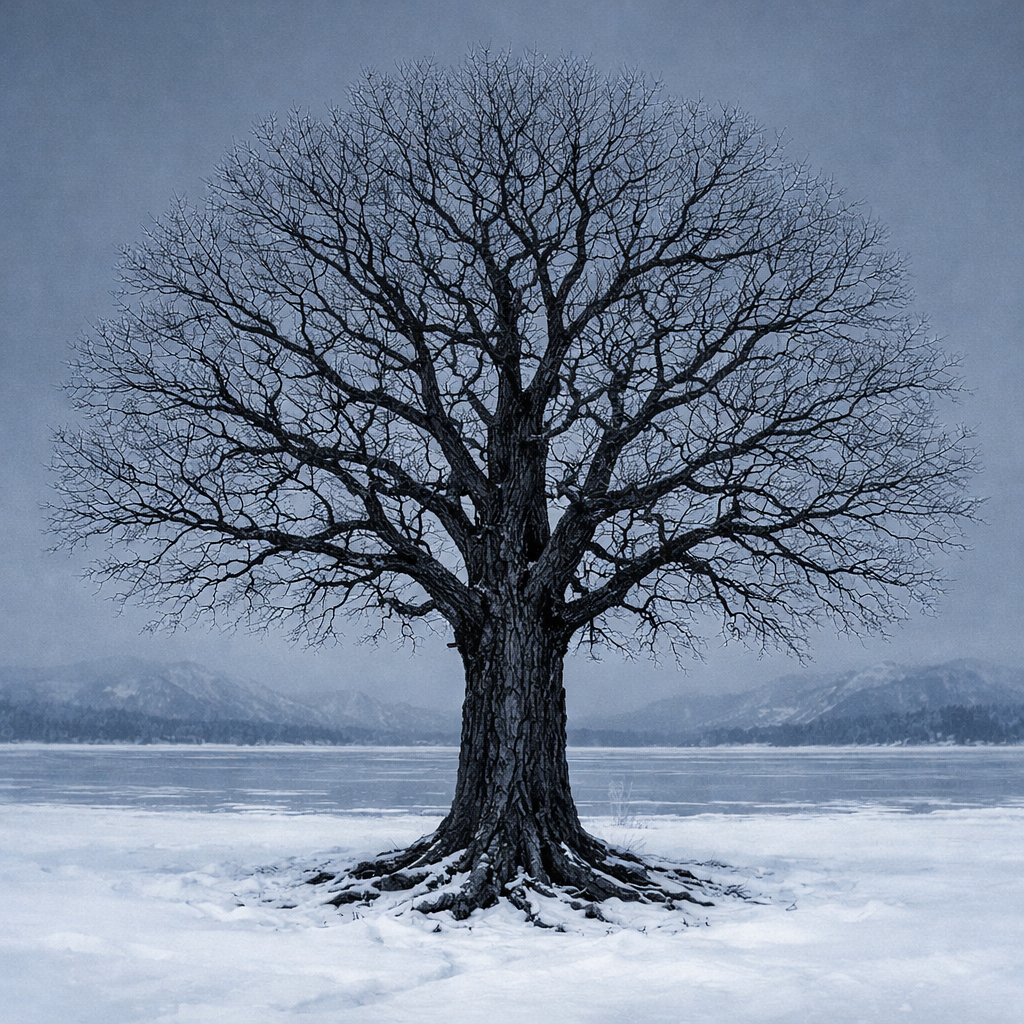
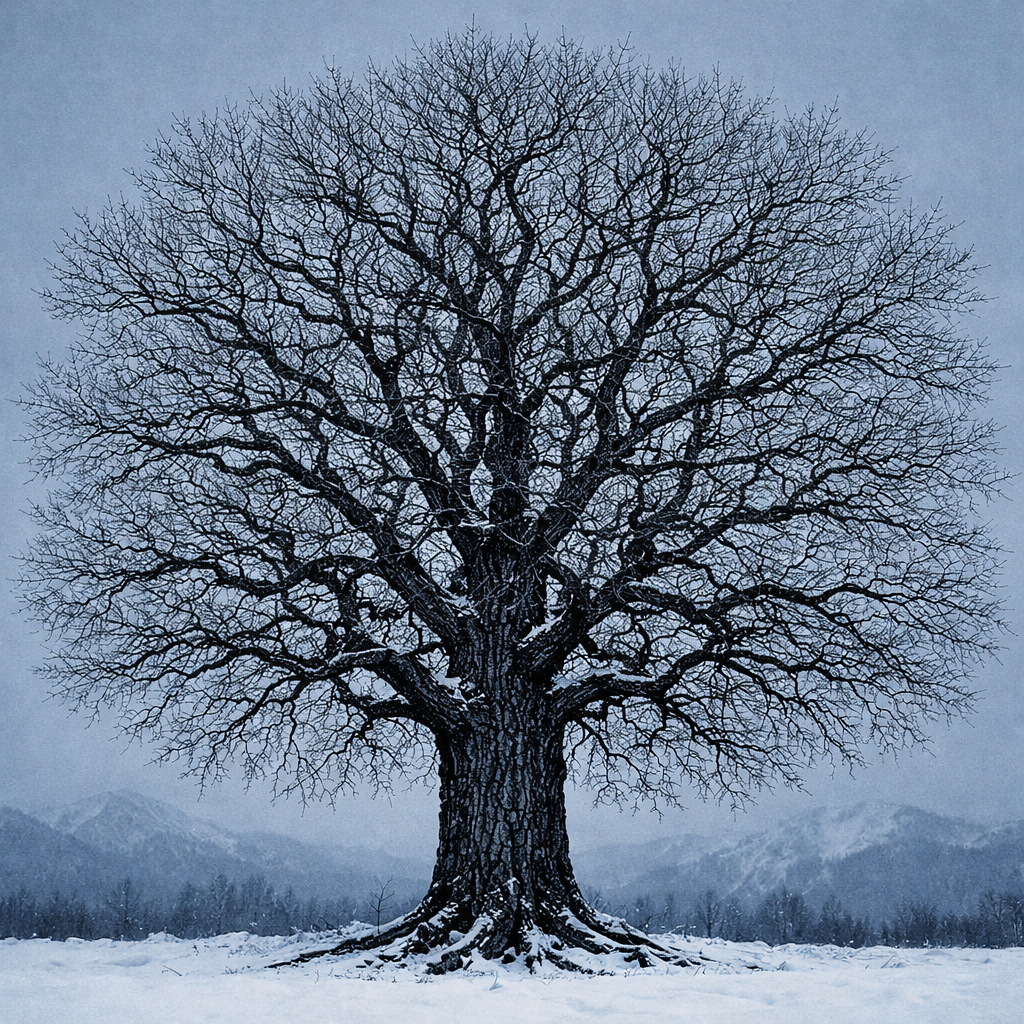
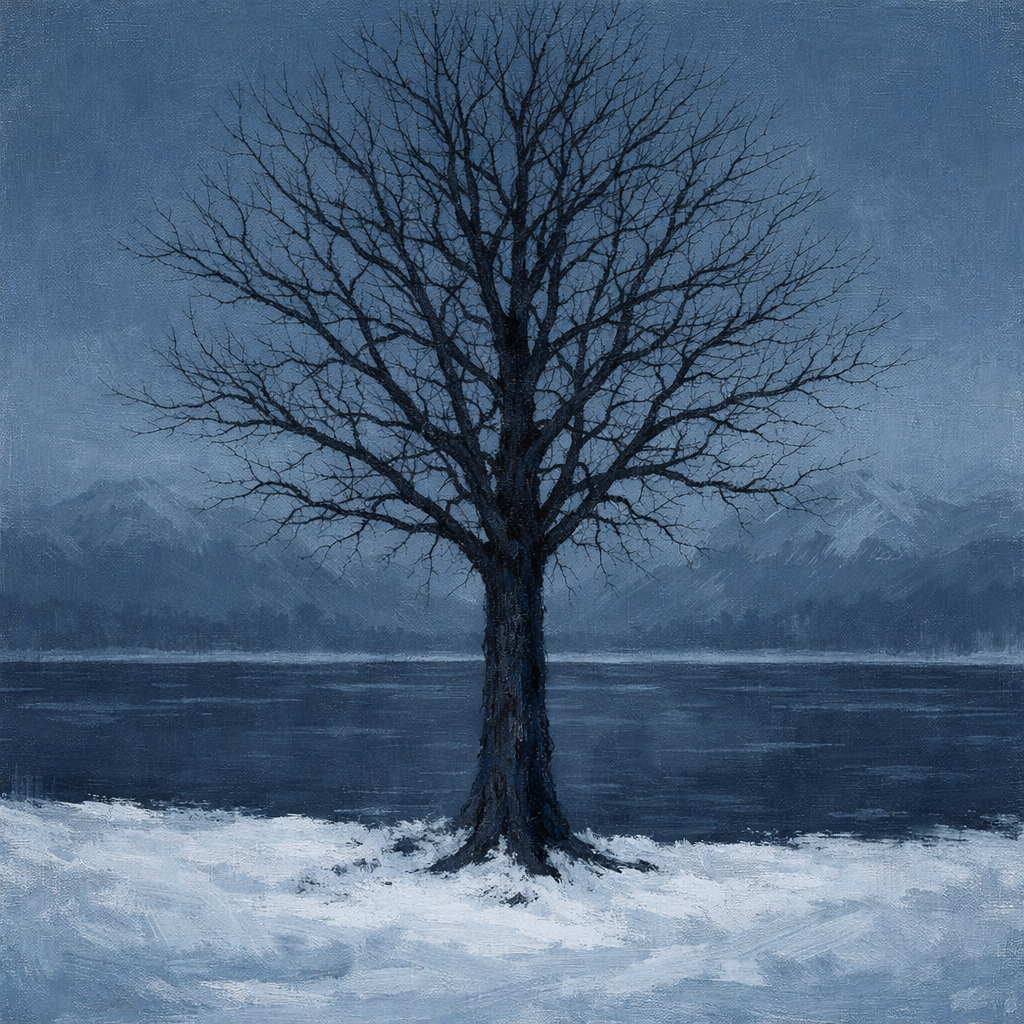
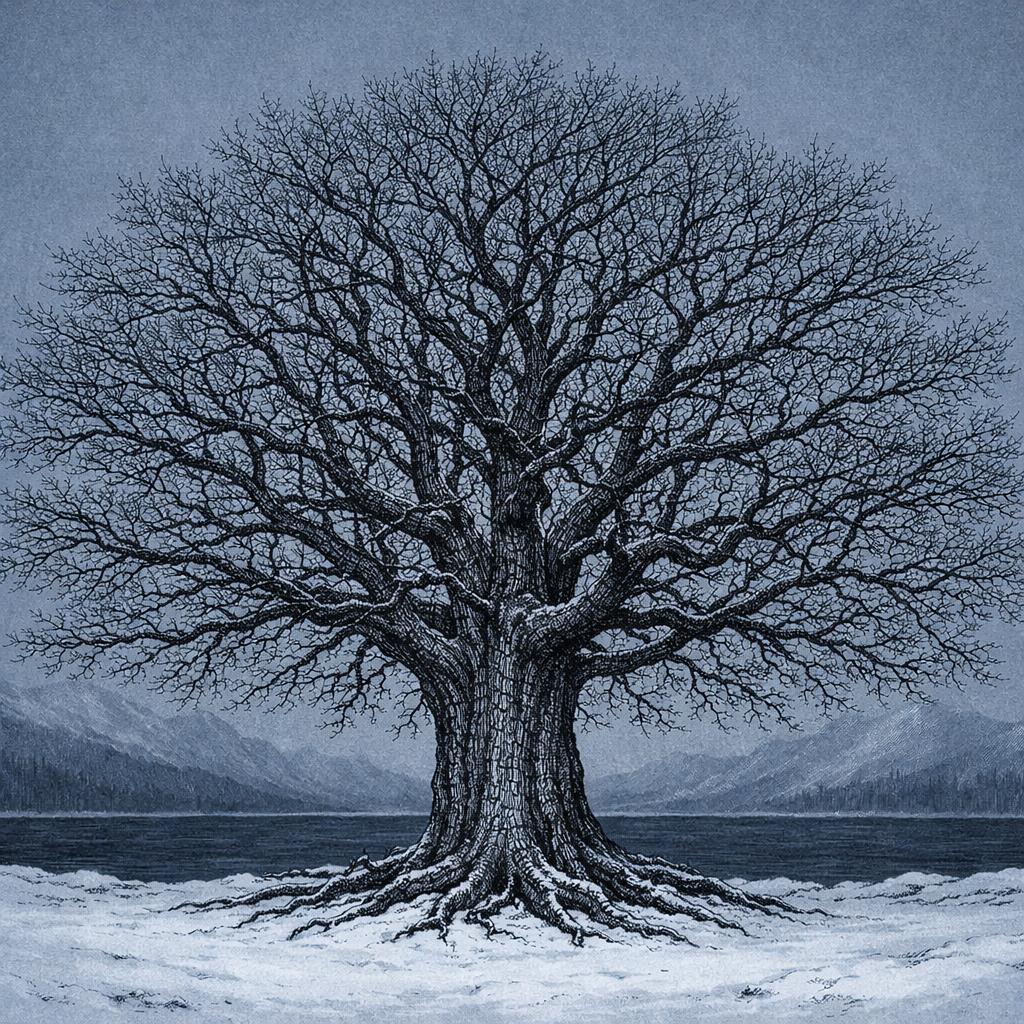
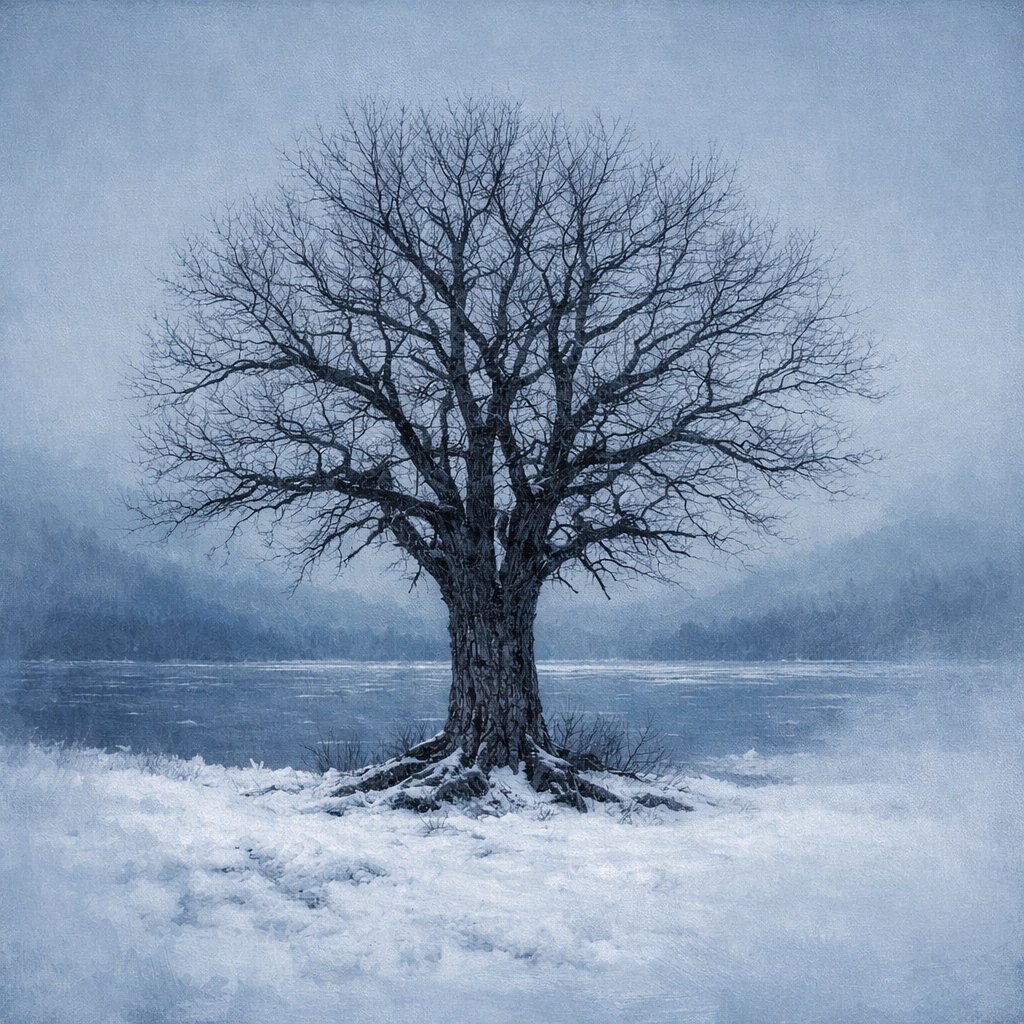
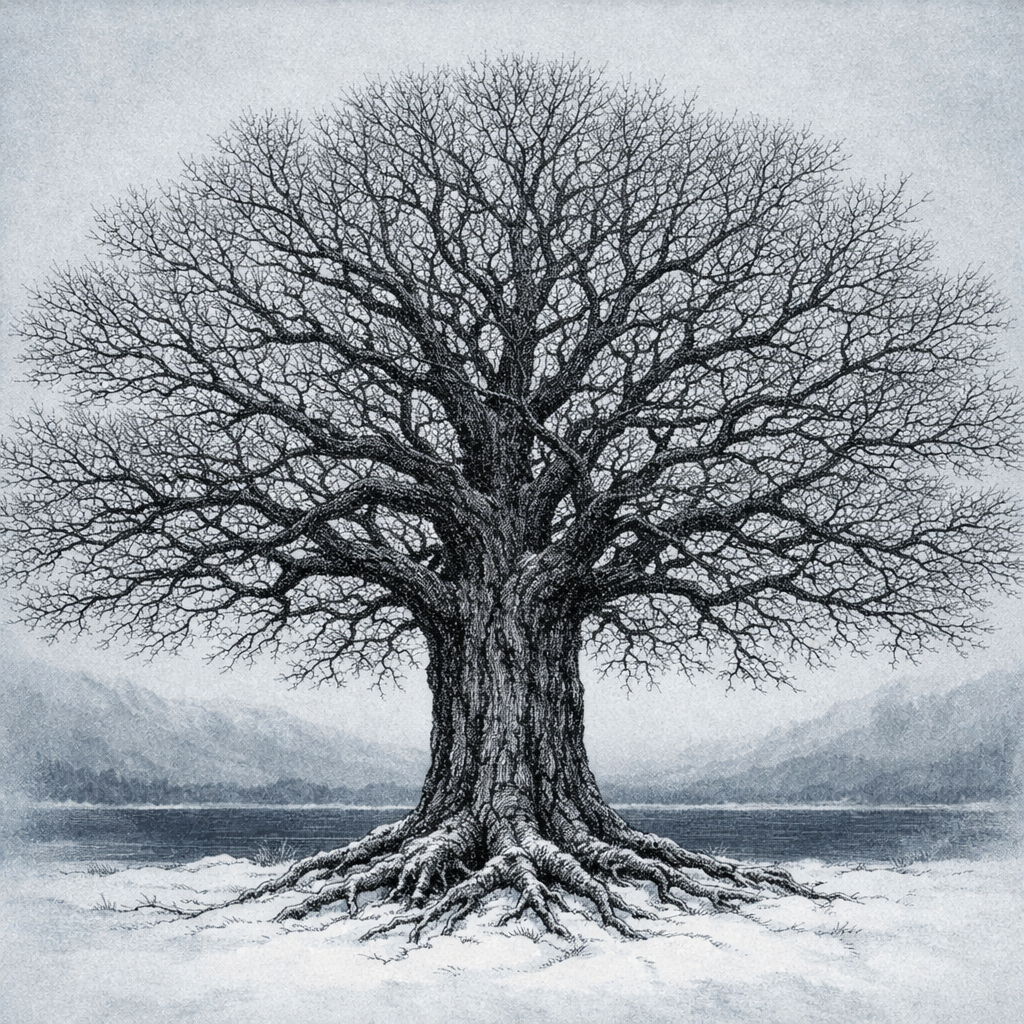
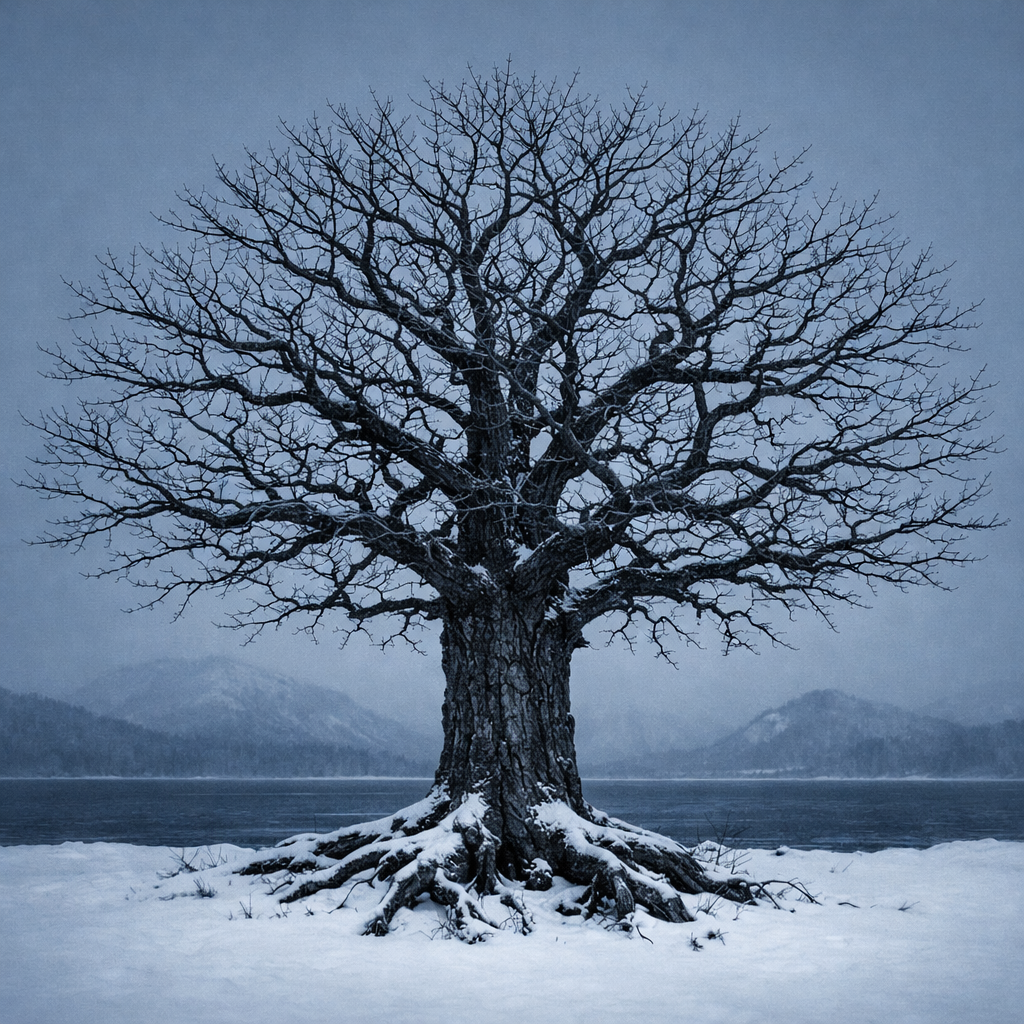
A bare blackwood cotton tree, centered, fully visible from roots to crown. Hyper-detailed fractal branching with obsessive precision. Snow-covered landscape with ghost-forms of frozen lake and mountain dissolving outward from painterly to impressionistic to abstract. Cool fading blues of late afternoon shadow. Restrained palette: blues, greys, whites. Near-black tree. Melancholic and bittersweet mood. Square format.
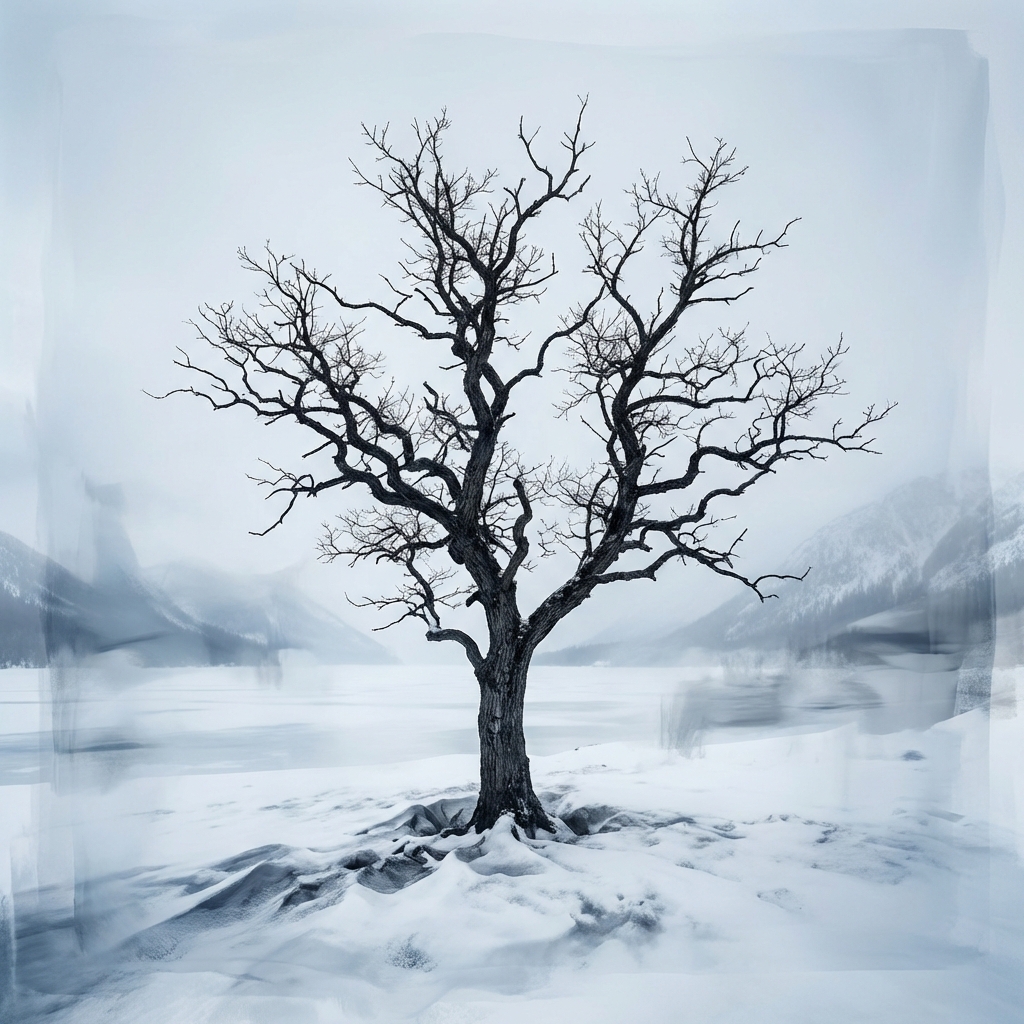 Step 0 6/10
 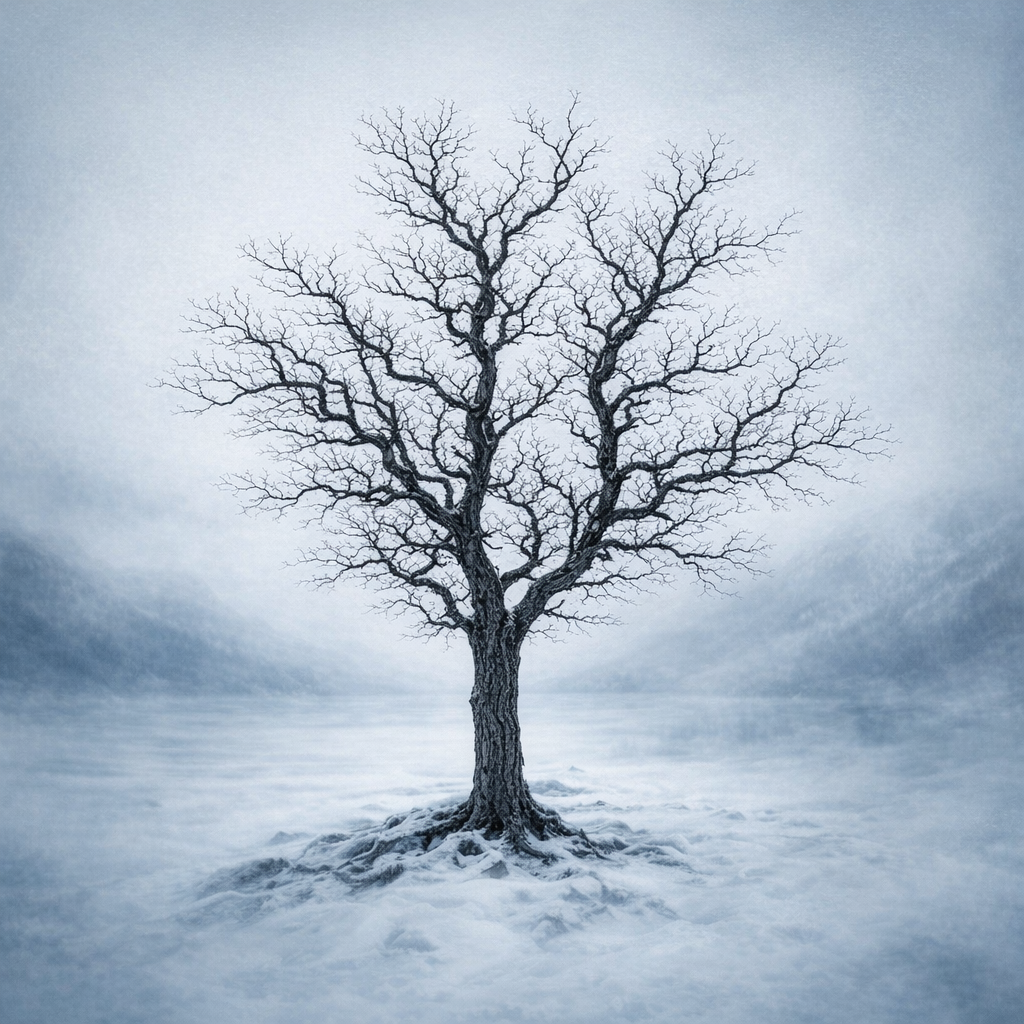 Step 1 5/10
 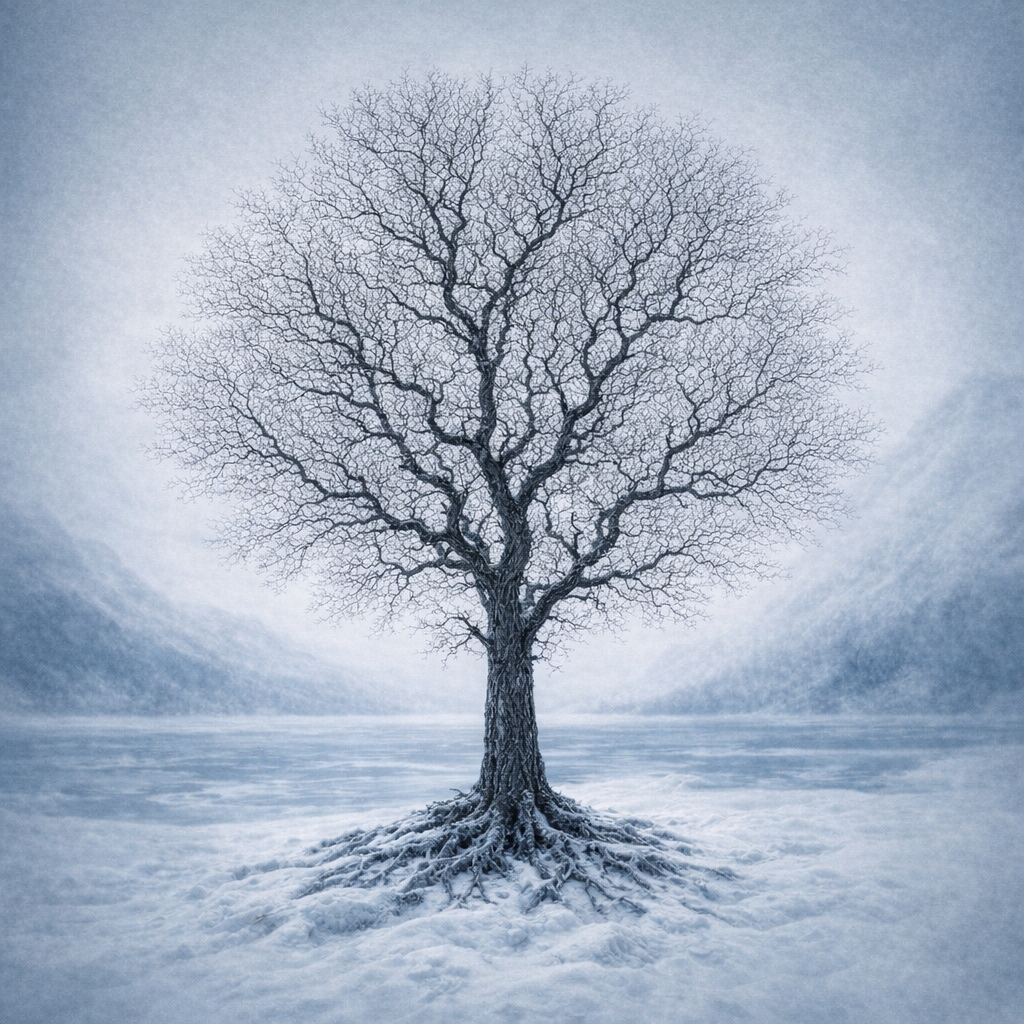 Step 2 5.5/10
 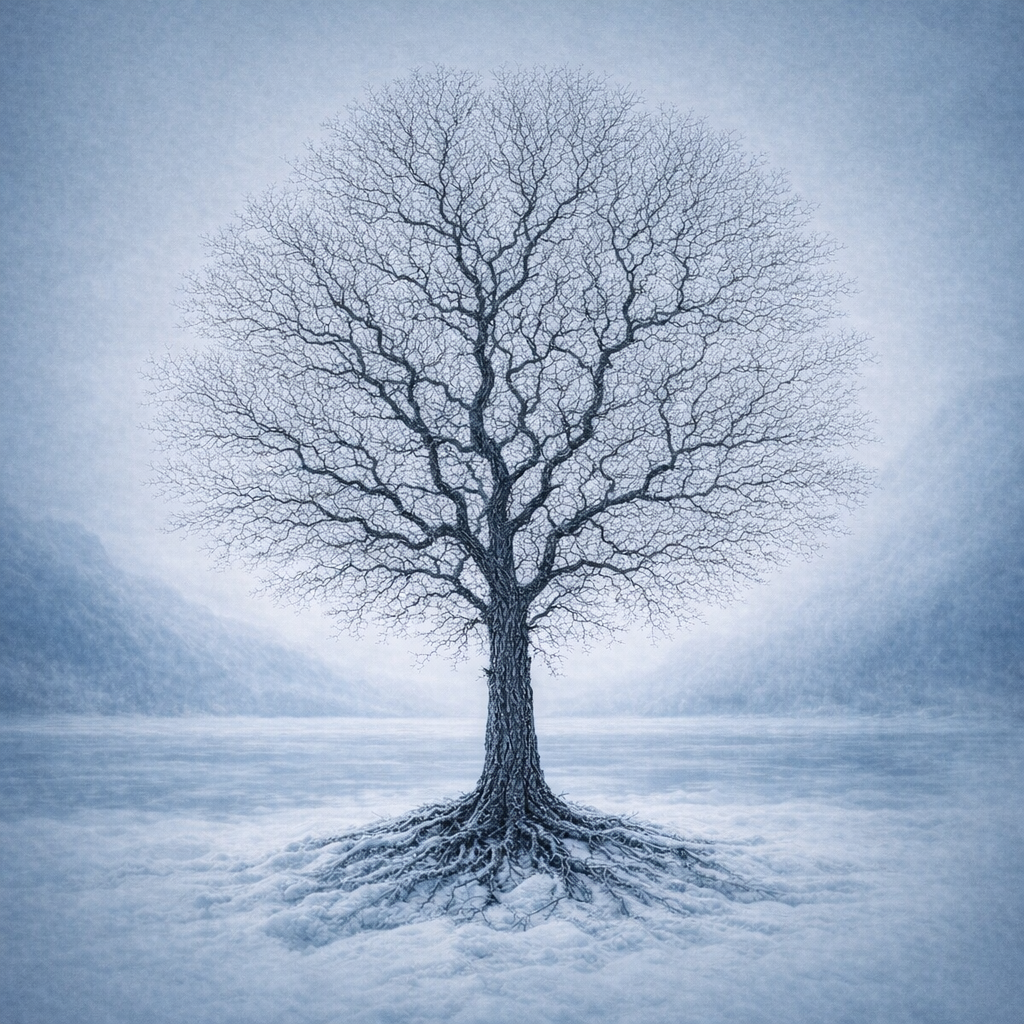 Step 3 6/10
 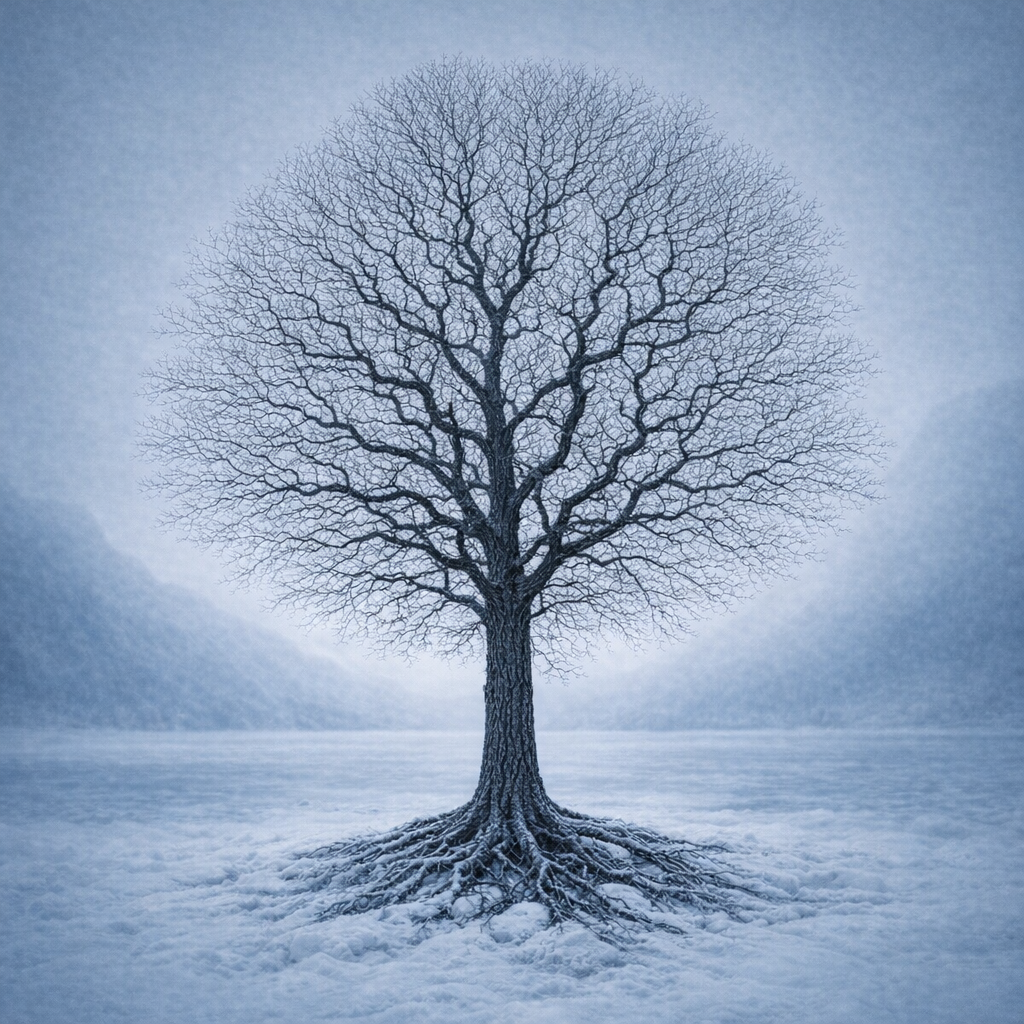 Step 4 6.5/10
 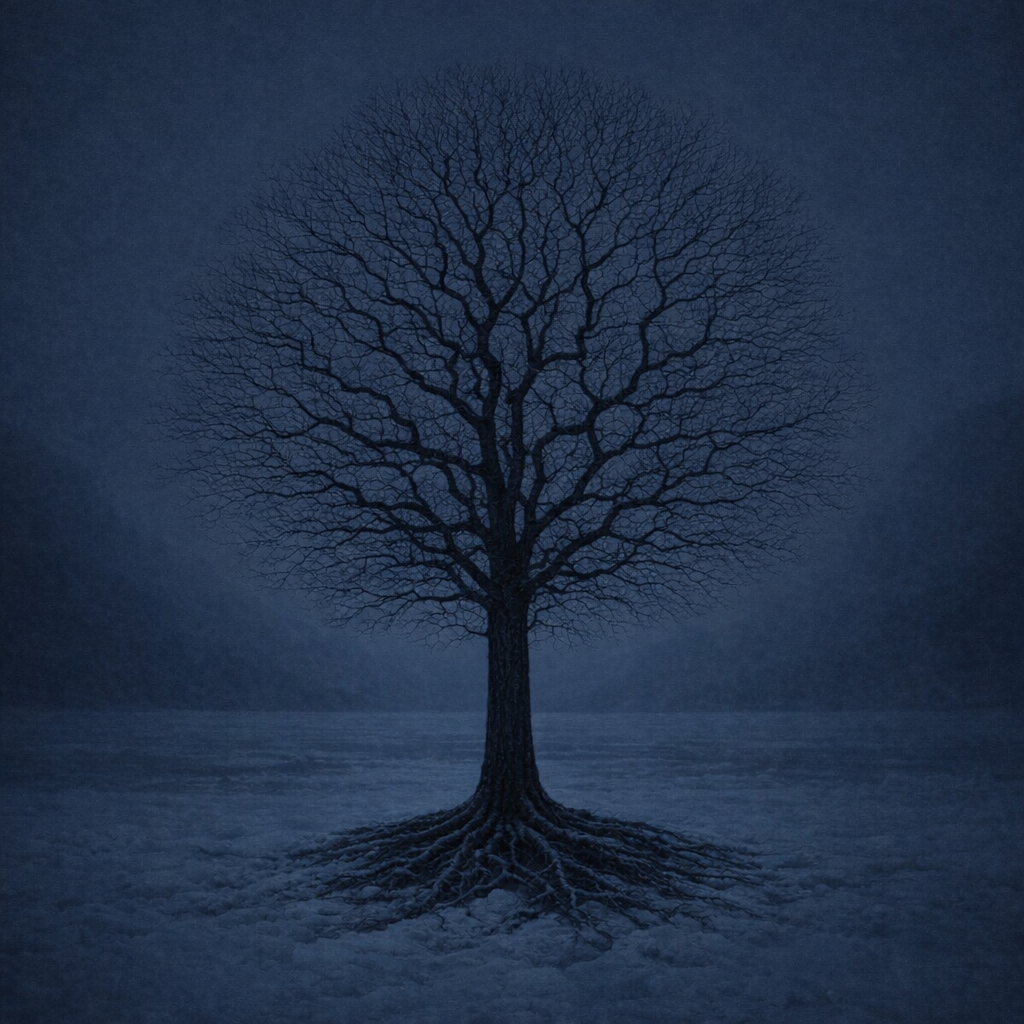 Step 5 5.5/10
 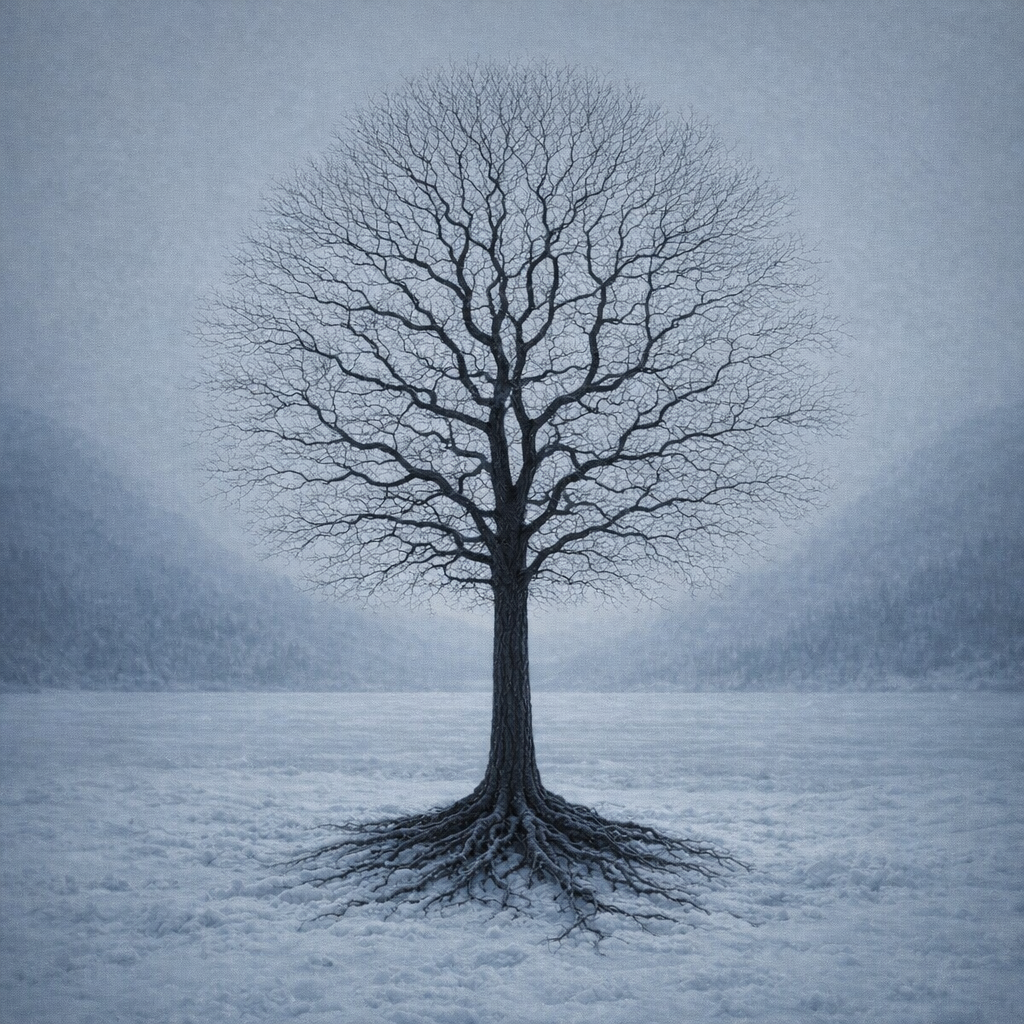 Step 6 6.5/10
 - Centered bare tree, cool blue palette
- Snow at base dissolving outward
- Ghost mountains present
- Blur-to-abstraction transition works
- Branch detail moderate, not obsessive
- Decorative frame/border effect at edges — not in spec
- Mountains too defined on right side
- Obsessive twig detail at extremities
- More granular snow texture at base
- Centered bare tree, cool blue palette, no warm colors
- Melancholic mood, clean edges (frame effect fixed)
- Branch detail LESS intricate than step-0 — tree simplified
- Tree appears smaller/more distant
- Ghost-forms of lake and mountain almost entirely absent
Maximize branch detail. EXTREMELY intricate fractal branching — hundreds of fine twigs. Visible dark gnarled bark texture. DETAILED snow texture near base. FROZEN LAKE in mid-ground, MOUNTAIN behind in impressionistic ghost-form.
- Tree larger in frame, denser crown
- Exposed roots appeared (model-invented)
- Rounded halo-like glow around tree crown
- Fine twigs blurry/soft, not sharp
Hair-thin twigs at every tip. Deeply cracked bark. FROZEN LAKE flat surface behind tree. NO bright glow or halo around tree.
- Tree centered, good proportion, exposed roots
- Mountain ghost-form more visible
- Bright halo/glow ring persists despite explicit correction
- Fine twig detail slightly better but still not obsessive
Sky behind tree SAME TONE everywhere — NO glow, NO halo. Flat frozen lake surface in middle distance.
- Branching getting more detailed, cool palette
- Mountain ghost visible on right
- HALO still present
- Fine twigs still not obsessive
CRITICAL: sky must be UNIFORM dark blue-grey — NO glow, NO halo, NO lighter circle behind tree.
- HALO IS GONE — major breakthrough
- Sky is uniform dark blue
- Scene TOO DARK overall — lost visibility
- Snow lost its pale white quality
- Tree branches silhouetted rather than detailed
OVERCAST pale blue-grey sky — light enough to see all branch detail but without warmth. PALE WHITE snow. Recover visibility while keeping uniform sky tone (no halo).
- Light level recovered, mountain ghost-forms visible
- Snow pale white contrasting with dark tree
- Progressive blur present, right mood
- Halo partially returned (subtle lighter zone)
- Branch detail still not obsessive
- Lake not distinguishable, trunk thin
The halo was the most revealing dynamic. It appeared in step 2 and resisted explicit "no halo" instructions for three iterations. I finally broke it in step 5 by pushing the entire sky very dark — but this overcorrection destroyed the light level. Step 6 recovered the light, and the halo partially returned. The halo isn't a bug. It's how the model creates visual separation between a detailed foreground subject and a blurred background. Verbal correction can't eliminate a structural behavior without side effects.
Scores oscillated 6 → 5 → 5.5 → 6 → 6.5 → 5.5 → 6.5. Non-monotonic. The chain ended where it started.